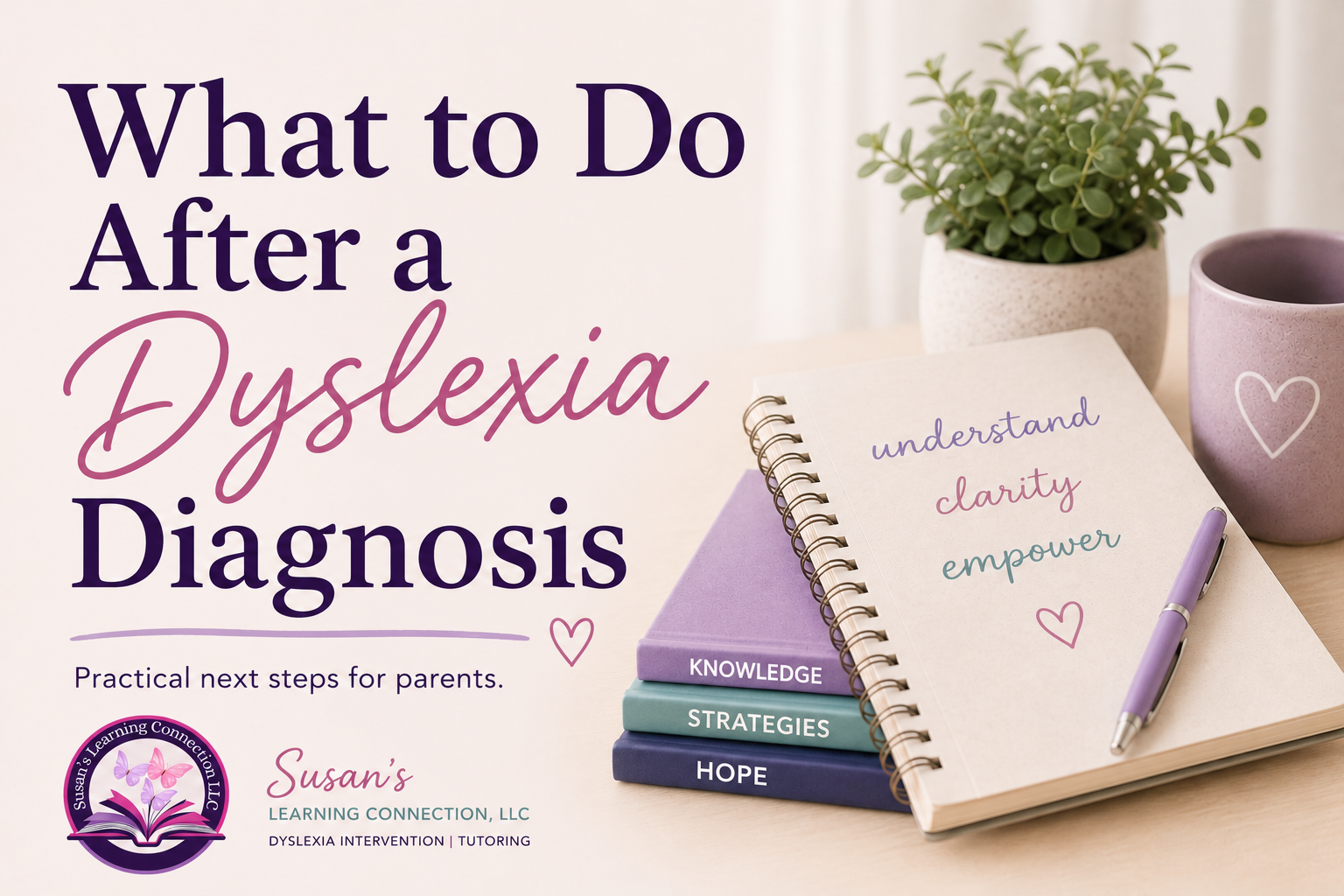
You finally have an answer—your child has dyslexia.

And if you’re like most parents, that answer brings just as many questions, and a feeling of overwhelm.
- What should I do first?
- Who do I trust?
- Am I already behind?
If you’re feeling unsure where to start, you’re not alone. This is a common place to be.
Let’s walk through a few simple next steps to help you move forward without feeling so overwhelmed.
Start by Understanding the Diagnosis

A dyslexia diagnosis can feel overwhelming—but it’s also helpful.
It gives you direction.
At its core, dyslexia is a neurological difference in how the brain processes language, especially for reading and spelling. It’s not a reflection of intelligence, and it’s not something your child will simply outgrow—but with the right support, they can learn strategies to thrive. Many individuals with dyslexia also have unique ways of thinking that can become powerful strengths. (As explained by the International Dyslexia Association)
You don’t have to become an expert on dyslexia overnight, but having a basic understanding will help you make more confident decisions moving forward.
Here is a helpful video for understanding dyslexia.
Take a Closer Look at What’s Happening at School

Finding the right support for your child is an important first step. Many parents assume the school will take it from here, but it can be helpful to ask a few simple questions so you understand what support your child is actually receiving — and whether outside intervention may also be beneficial.
You might start with:
- What kind of reading instruction is being used?
- How often is my child getting support?
- How will we know if it’s working?
You’re not being difficult—you’re being informed. And that makes a big difference.
Consider What Kind of Support Your Child May Need

This is often the part that feels the most overwhelming.
You’ve talked with the school, started searching online, and quickly realized there are countless programs, tutors, methods, and opinions out there — and not all of them are designed to support students with dyslexia.
Children with dyslexia benefit most from structured, explicit, step-by-step reading instruction provided by someone with specialized training who understands how dyslexia impacts reading and learning. (You can also review the recommendations from the International Dyslexia Association here.)
You do not have to figure everything out overnight, but finding appropriate intervention is an important first step — and one that can make a meaningful difference moving forward.
Give Yourself Permission to Take It One Step at a Time

It’s easy to feel like you need to fix everything right away. But this is a process—and it’s okay to move through it step by step.
Wherever you are, you’re doing the right thing asking questions, searching for answers, and learning.
A dyslexia diagnosis can feel like a lot at first—but it also gives you a path forward.
You don’t need to have everything figured out today. Just starting with a few clear steps can make this whole process feel more manageable.
You don’t have to stay stuck in the overwhelm.
If you’d like a simple first step, I’ve created a free guide to help you know exactly what to do after a dyslexia diagnosis.
If you’re wanting more detailed guidance and a clearer plan forward, I’ve created a step-by-step roadmap for parents navigating life after a dyslexia diagnosis.
It’s based on what I often walk through during consultations, all in a more affordable, self-paced format. The guide also includes a video walkthrough from me, tons of helpful resources and links, and practical next steps to help you feel less overwhelmed and more confident moving forward.
📚 You can find more about it here.
Hi! Thanks for being here. I’m Susan, a Certified Dyslexia Practitioner helping overwhelmed parents make sense of dyslexia, take the next clear step, and supporting students through Orton Gillingham reading intervention.
Susan Clabaugh (A/OGA, CALP/ALTA, MAT)
© 2026 Susan Clabaugh. All rights reserved. Please do not copy or redistribute this content without written permission.
All content is provided for educational purposes only. I am not an attorney, and nothing on this site should be considered legal advice. Susan Clabaugh & Susan’s Learning Connection LLC are not responsible for any outcomes related to the nonuse, use, or application of this material.